A walking plan works best when it answers three questions: Which days will you walk? How long will you go? When will you pick up the pace? “Walk more” is a good intention, but it’s hard to follow on a busy Tuesday. A plan you can put on your calendar gives your heart a regular workout without asking your feet and legs to do too much too soon.
If you’re starting from little exercise, don’t aim for a fast 30-minute walk on day one. Start with a distance and pace you can repeat. Then build the habit, extend the walks, and add more brisk minutes. That approach matters because short, manageable walks can build toward longer, faster activity.
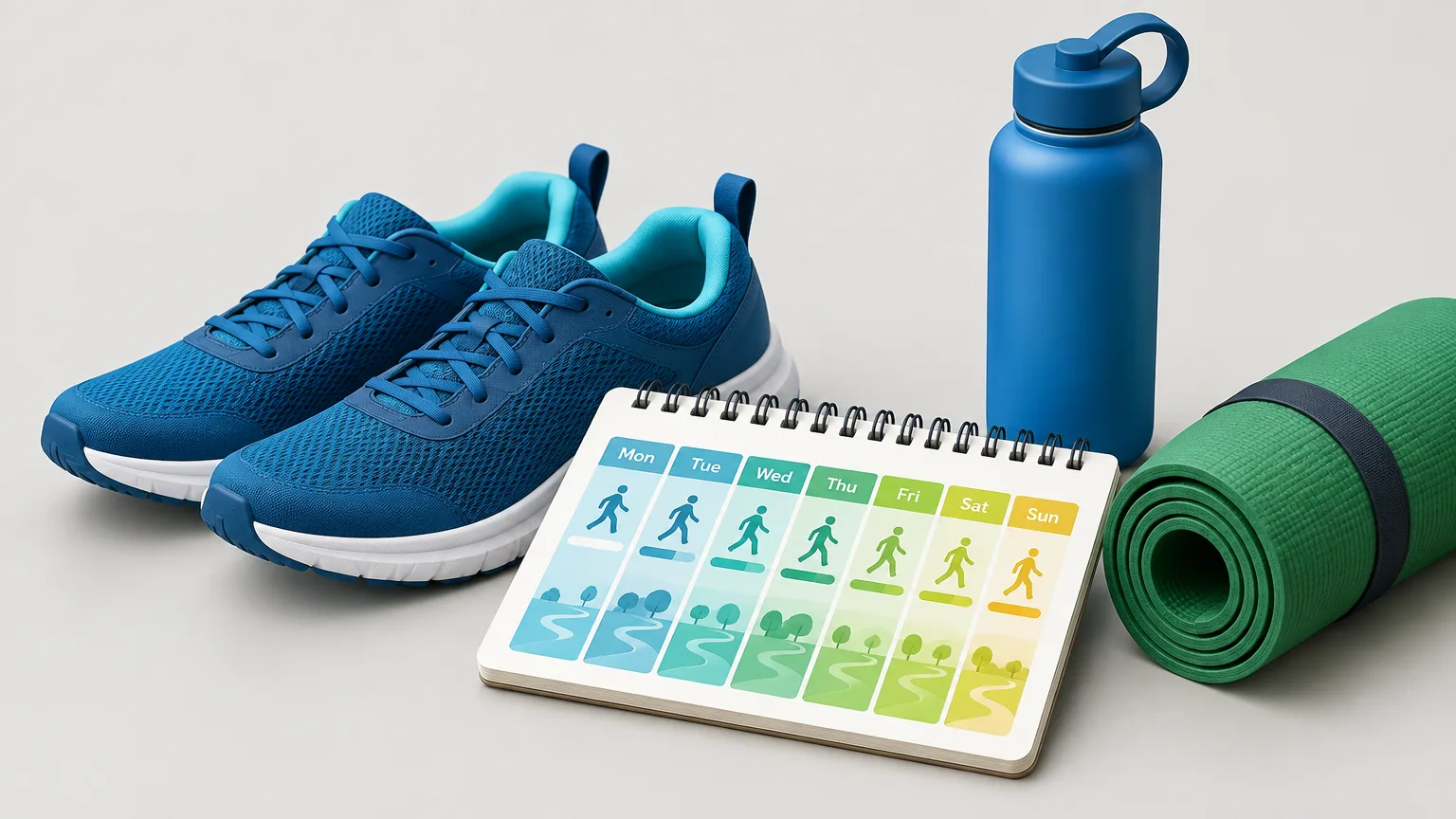
Set the goal, but start where you are
For adults, the weekly aerobic activity target is at least 150 minutes at moderate intensity, such as brisk walking. That could be 30 brisk minutes on five days. The same guidance calls for muscle-strengthening activity on at least two days a week. Walking supports cardiovascular fitness, but it doesn’t replace that separate strength goal.
Treat 150 minutes as a destination, not an entry requirement. A 10-minute walk is a useful starting point if that’s what you can comfortably do. If you already walk most days, your starting point may be much closer to the goal.
The key distinction is between total walking time and moderate-intensity time. An easy warm-up and cool-down are worth doing, but they generally won’t count as brisk minutes. The schedule below keeps those numbers separate so a week of 150 total minutes isn’t mistaken for 150 minutes at a moderate effort.
Find your brisk pace without chasing a speed
During a moderate-intensity walk, your breathing picks up, but you can still talk in sentences. You probably couldn’t sing. If you can say only a few words before needing a breath, ease off. This talk test accounts for how effort varies from person to person, making it more useful than trying to hit one speed on every route.
Start each walk at an easy pace, settle into your brisk pace for the planned middle portion, and slow down at the end. The American Heart Association recommends five to 10 minutes of slower activity for both warming up and cooling down around moderate or vigorous exercise. The sample schedule uses five minutes at each end. On a short walk, that means only a few brisk minutes—and that’s fine.
A brisk walk should feel purposeful, not forced. Keep your shoulders relaxed, let your arms swing naturally, and use a comfortable stride. If you need to lunge forward to keep up with a pace on your watch, slow down and use the talk test instead.
An eight-week walking schedule you can adjust
This example is for someone who can comfortably walk for about 15 minutes and wants to build toward 150 brisk minutes a week. It increases frequency first, then adds time. Every listed walk includes five easy minutes at the start and five at the end; the brisk portion falls between them.
| Week | Walking days | Total time per walk | Brisk time per walk | Brisk minutes for the week |
|---|---|---|---|---|
| 1 | 3 | 15 minutes | 5 minutes | 15 |
| 2 | 4 | 15 minutes | 5 minutes | 20 |
| 3 | 4 | 20 minutes | 10 minutes | 40 |
| 4 | 5 | 20 minutes | 10 minutes | 50 |
| 5 | 5 | 25 minutes | 15 minutes | 75 |
| 6 | 5 | 30 minutes | 20 minutes | 100 |
| 7 | 5 | 35 minutes | 25 minutes | 125 |
| 8 | 5 | 40 minutes | 30 minutes | 150 |
For three walks, try Monday, Wednesday, and Saturday. For four, try Monday, Wednesday, Friday, and Sunday. At five, a Monday–Tuesday–Thursday–Saturday–Sunday pattern leaves two nonwalking days. The specific days don’t matter nearly as much as choosing times you can keep.
These weeks aren’t deadlines. If week three leaves you unusually tired or your feet need more time to adjust, repeat it. If you miss several walks, resume at a level that feels manageable rather than trying to “make up” every minute on one outing. Federal guidance encourages inactive adults to begin with small amounts and work toward the weekly target over time.
There’s no need to wait until week eight to count your progress. Each added walking day makes the routine more reliable, and each comfortable brisk stretch gives you practice sustaining a moderate effort.
Change the plan to fit your starting point
If 15 minutes feels like too much
Begin with five to 10 easy minutes on three or more days. You can also take several short walks in a day rather than one continuous walk. Build toward a comfortable 15-minute outing before using the table, and leave out its brisk portion until a faster pace feels manageable. Even short bouts of activity contribute to health, so there’s no need to rush this stage.
If walking itself is limited by a health condition or disability, the right duration and activity may differ from this example. The CDC advises consulting a health professional or physical activity specialist about suitable types and amounts of exercise.
If you already walk regularly
Don’t restart at week one just because it’s first in the table. Find the week whose frequency and duration match what you’ve done comfortably for the past few weeks. Then check your effort: a 30-minute stroll and a 30-minute brisk walk are not the same cardiovascular workout.
If you already walk briskly for 30 minutes five days a week, keep that base. You could make one outing a little longer or add short faster stretches to one walk. Keep most walks at a pace you can sustain rather than turning every session into a test.
If a continuous brisk stretch is hard
Break it up within the same walk. After warming up, try two minutes brisk and two minutes easy, repeated a few times, then cool down. As that becomes comfortable, lengthen the brisk portions or shorten the easy portions. The American Heart Association suggests brisk intervals as one way to increase the challenge of a walk. Count only the minutes that actually feel moderate in effort toward your brisk total.
Make the schedule usable outside a perfect week
Put walks on your calendar, but give each one a backup. A lunch walk might move to after dinner. A rainy outdoor walk might become laps in a mall or another safe indoor space. If 40 minutes won’t fit on a weekday, two shorter walks can provide the same total brisk time, provided both include time at a moderate effort.
Track just three things: walking days, brisk minutes, and how the walks felt. A note such as “20 brisk minutes; could still talk; calves felt fine the next day” is enough to guide next week’s choice. A step count can be interesting, but it doesn’t tell you how many minutes you spent at a brisk pace.
Pay attention to patterns rather than one difficult day. If your usual walk feels easier after a few weeks, that may be a good reason to add time. If soreness or fatigue keeps accumulating, hold steady or cut back. Comfortable shoes and a route that feels safe and convenient make the plan easier to repeat; neither a special device nor a perfect trail is required.
Walking also leaves room for the rest of your fitness. Two weekly strength sessions—using weights, resistance bands, or suitable bodyweight movements—can sit on walking or nonwalking days. You don’t have to complete every type of exercise in one workout.
Know when to slow down or stop
Breathing harder during a brisk walk is expected; chest pressure, faintness, or severe shortness of breath isn’t. Stop exercising and seek medical advice if symptoms such as chest discomfort or lightheadedness appear. People with known heart disease should get guidance from their clinician before starting a new exercise program; American Heart Association advice distinguishes that situation from a generally healthy person beginning light activity.
If you have chest discomfort that lasts more than a few minutes or returns, especially with shortness of breath, nausea, a cold sweat, or discomfort in the arm, back, neck, or jaw, call 911. Don’t try to walk it off.
Once you reach a week you can repeat comfortably, you have a plan—not just a goal. Keep the days that work, adjust the ones that don’t, and let your brisk minutes grow at a pace you can sustain.
Disclaimer
This article provides general fitness information, not individualized medical advice. Ask a qualified health professional how to adapt exercise if you have a medical condition or concerning symptoms.