A white shirt and jeans can look like something you put on, or an outfit you meant to wear. Often the difference is small: a belt that gives the shirt a clean edge, shoes with a sharper shape, or earrings that bring light near the face. None of those pieces has to be expensive or new.
The useful question isn’t “What else can I add?” It’s “What does this outfit need?” Accessories can define a silhouette, shift the mood, introduce color, or make practical clothes feel suited to the occasion. Pick one job first. The rest becomes easier.
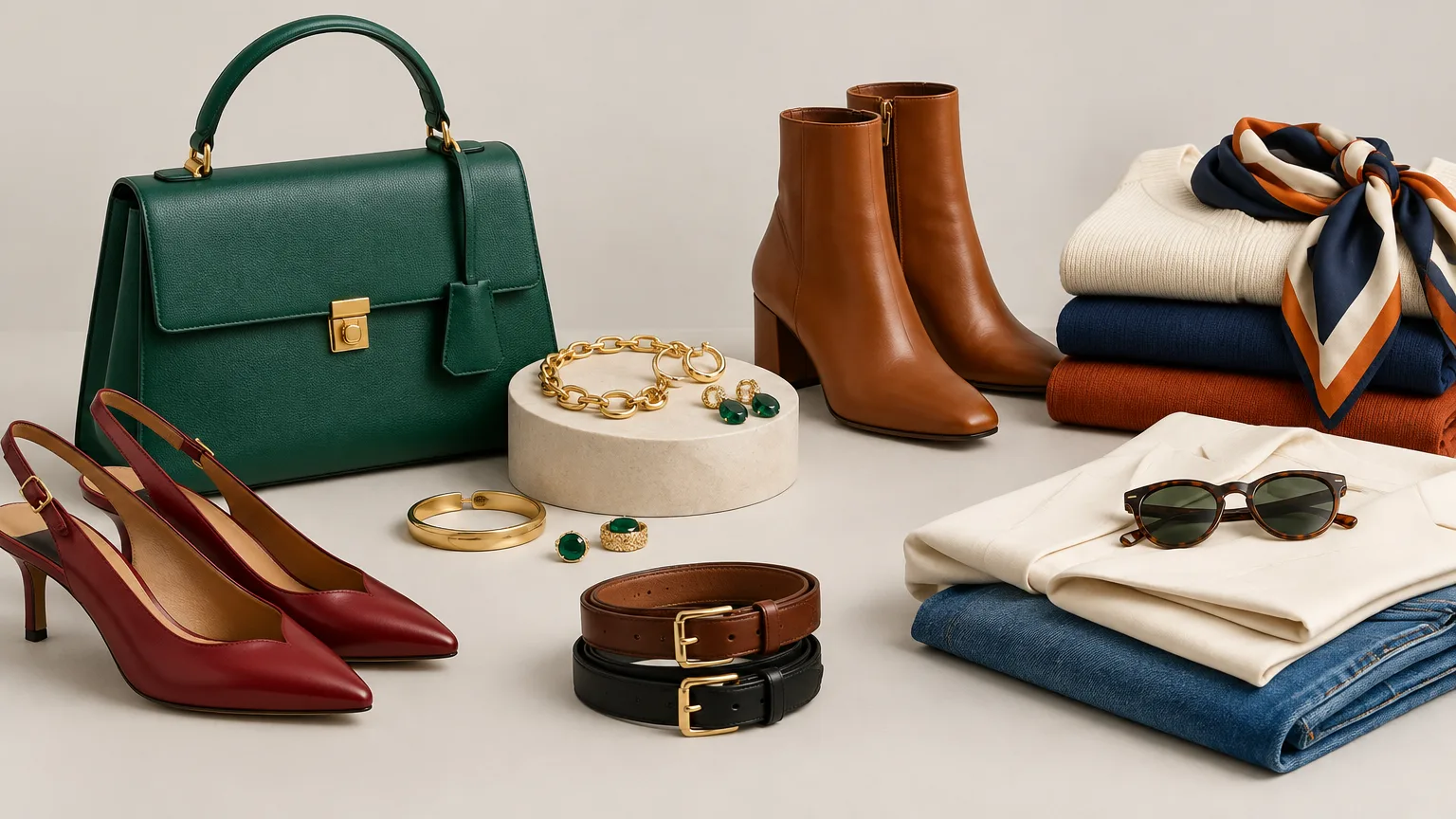
Start with the outfit, not the jewelry box
Get dressed down to the clothes and shoes, then look at the whole silhouette. Is the outfit already busy with print, texture, or an unusual cut? Or is it simple enough to carry something bold? Notice where your eye goes first. A bright sweater may need only a good bag; a plain knit and trousers might welcome a strong earring or belt buckle.
It helps to decide on one lead accessory. This isn’t a rule against wearing several things. It’s a way to give each one a role. If the lead is a printed scarf, your bag and jewelry can stay relatively quiet. If it’s a sculptural necklace, leave enough space around the neckline for its shape to register. Stylists use the same edit for understated looks: taking something off can work better than adding one more piece.
Try the outfit without accessories, then add them one at a time. Stop when the look says what you want it to say. “Finished” doesn’t mean full.
Balance scale across the whole look
Scale is the size and visual weight of a piece, not just its measurements. A slim black belt with a bright metal buckle may draw more attention than a wider belt that blends into the clothes. A small bag covered in hardware can look busier than a plain tote.
Start with the volume of the clothing. Wide-leg pants and an oversized shirt have room for a substantial bag or a broad cuff. A fitted dress or fine-knit top may look better with a smaller bag and lighter jewelry. Contrast can work, too—a large earring against a spare black dress is effective precisely because the dress gives it space.
Pay particular attention to accessories that sit close together. A large pendant, an ornate belt buckle, and a bag with a chunky chain all compete through the center of the body. Keep the piece you care about most and simplify its neighbors. You don’t need a mathematical limit; you need a clear first impression.
Use color to connect, not to match
A bag and shoes in exactly the same color can look polished, but matching is only one way to create order. Repeating a color loosely often feels easier: brown shoes with a tan belt, or a burgundy bag with a scarf that contains a little red. The pieces relate without looking like a set.
You can also let one accessory be the exception. With navy trousers, a white shirt, and dark loafers, a green bag adds interest without requiring another green item. A single colored bag, shoe, scarf, or belt can change the feel of simple clothes. If the outfit already has several colors, look for an accessory that picks up one of them—or choose a quiet neutral.
Metals needn’t be identical. Gold earrings can sit alongside a silver bag clasp, especially when one is small or the mix appears elsewhere in your jewelry. What matters more is the overall finish. Sleek, shiny hardware reads differently from worn leather and matte metal; both can be good, but decide whether you want harmony or a deliberate contrast.
Give each accessory a practical job
Bags: consider shape and where the strap lands
Choose a bag for what it has to carry, then for how it looks on the body. A small structured bag can make a soft dress or roomy shirt feel more deliberate. A slouchy bag can relax a tailored jacket. Neither effect depends on matching the shoes.
Try the bag on with the actual outfit, not just in your hand. A shoulder bag that lands at the widest part of a bulky jacket may add volume where you don’t want it. A crossbody strap can cut across an interesting neckline or pull a loose top out of shape. Adjusting the strap length—or carrying the bag by its handle—may solve the problem without changing bags.
For an evening out, check that the bag holds what you’ll actually take. For a long day, the best-looking option loses its appeal if you have to carry the overflow separately.
Belts: decide whether they should blend or stand out
A belt can hold trousers in place, give a tucked shirt a clean stopping point, or change the shape of a loose dress. Those are different jobs. For the first two, a simple belt that works with the pants and shoes is often enough. For the third, look at how the fabric falls once it’s cinched. If it bunches heavily above the belt, try a different width or let the garment hang free.
A distinctive buckle can be the outfit’s main detail, particularly with denim and a plain top. A polished buckle offers an alternative focal point to a statement necklace. Give it room: if the buckle is elaborate, a simple necklace or no necklace at all may look stronger.
Don’t add a belt just because there are belt loops. If the waistband sits well and the top looks better untucked, leaving it alone is a styling choice too.
Jewelry: work with the neckline and sleeves
Jewelry is easiest to choose once the top is on. An open collar leaves space for a short chain or pendant. A high neckline often gives earrings or a cuff a clearer role than a necklace. With a patterned blouse, small studs may be enough; with a plain T-shirt, a substantial necklace can do the work that a print otherwise would.
Check what the sleeves reveal. A bracelet disappears under a long cuff, while a ring stays visible. Short sleeves give a watch, cuff, or stack of bracelets room to show. If you love several necklaces together, vary their lengths enough that each can be seen rather than settling into one tangled line.
The most useful jewelry isn’t necessarily the most noticeable. Small earrings, a watch, or a familiar ring can add a sense of intention without changing the character of the clothes.
Shoes: finish the silhouette from the ground up
Shoes affect both the mood of an outfit and the line of the hem. Try them on before deciding that the rest of the look is done. A wide trouser leg may fall cleanly over a substantial shoe but bunch around a delicate flat. A cropped pant puts more of the shoe on display, so its shape matters.
Changing shoes is often the quickest way to reuse an outfit. The same jeans and blazer can feel relaxed with sneakers, sharper with loafers, and dressed for dinner with a sleek boot or heel. But don’t sacrifice the day to make that change. If you’ll be walking or standing for hours, a shoe you can wear comfortably is part of a successful outfit, not a compromise.
Let the occasion set the level of polish
Accessories can move familiar clothes between settings, but they can’t do all the work. A canvas tote and casual sneakers may be right for errands; swapping them for a neat shoulder bag and loafers can make the same trousers and knit feel ready for lunch or an informal office. For a more formal invitation, check the clothing and dress code before assuming a clutch and earrings will make a casual outfit fit.
Think about how the pieces will behave once you leave the mirror. Earrings that catch on a scarf, a bag you must hold all evening, or a belt that shifts when you sit can make a carefully styled look feel fussy. Try sitting, walking, and putting on your coat. The finishing details should make getting dressed feel easier.
Update what you own before buying anything else
Before looking for a new accessory, gather the bags, belts, jewelry, and shoes you already reach for. Pair them with an outfit you wear often and change one thing at a time. Try the work trousers with a different shoe. Carry the dress with a structured bag instead of the soft one you usually use. Put the belt over a jacket rather than through jeans, if the jacket’s shape allows it.
This small exercise shows what’s genuinely missing. Perhaps you need a bag that works with your everyday shoes, or earrings visible with the high necklines you favor. Perhaps you need nothing—just a better pairing among pieces you own.
Do one last check in a full-length mirror, with the coat and bag included. If your eye lands where you intended and nothing feels awkward to wear, the outfit is finished.