A purchase made on the day after your credit card statement closes may not be due for nearly two months. A purchase made the day before it closes could be due in just a few weeks. Neither purchase has to cost you interest—but only if your card offers a purchase grace period and you meet its payment terms.
The rule for most cards is simple: pay the full statement balance by the payment due date, every billing cycle. Paying the minimum keeps your account from becoming late, but it generally won’t preserve your grace period. Paying the larger balance displayed in your app may be unnecessary because it can include purchases that haven’t appeared on a statement yet.
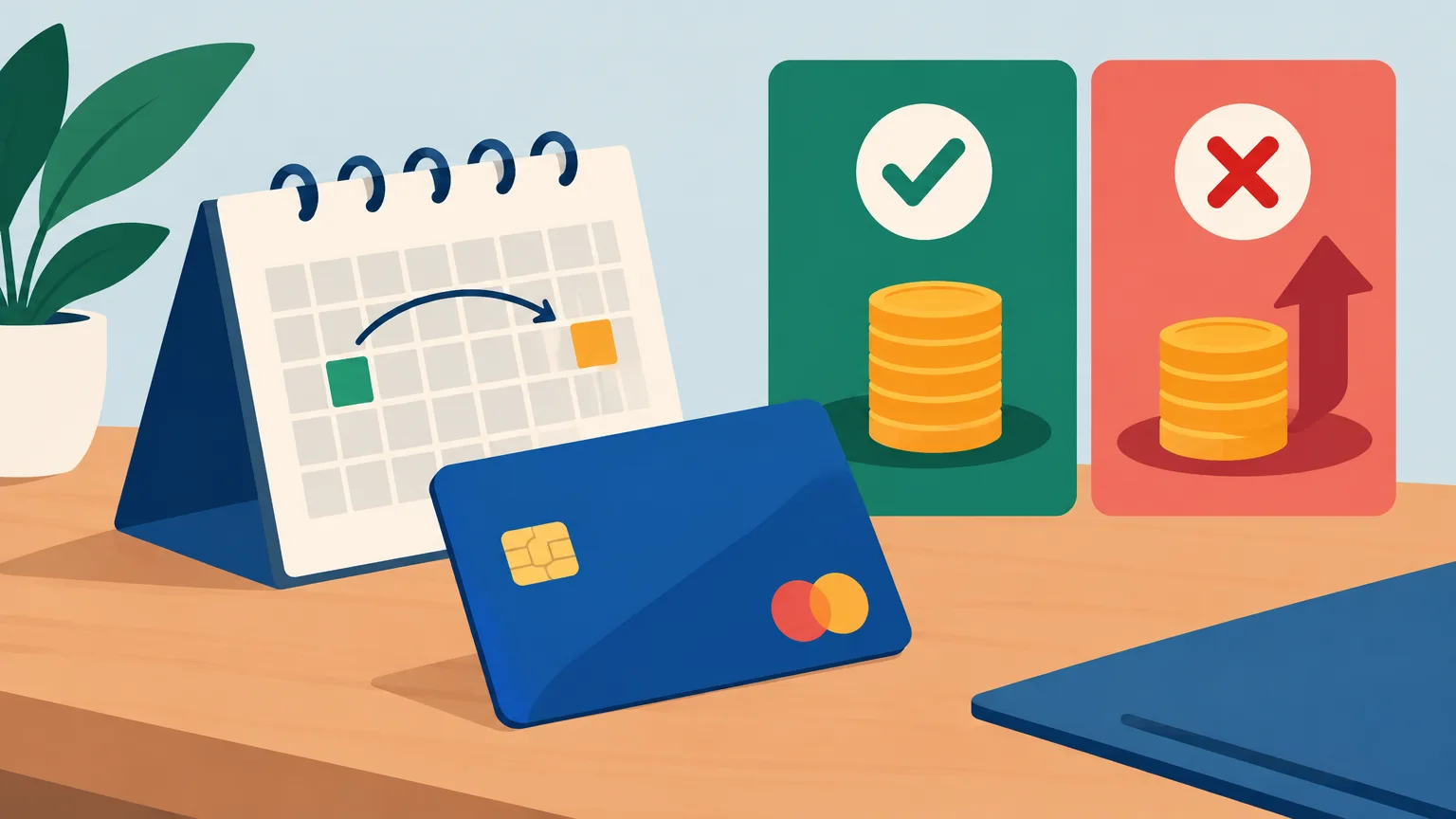
What the grace period covers
A credit card grace period is the time between the end of a billing cycle and the due date for that cycle’s bill. Most credit cards offer one for purchases, though they aren’t required to. If you’re eligible and pay the balance in full by the due date, you can avoid interest on those purchases.
The word “grace” can be misleading. This isn’t extra time after your payment is due. It’s an interest-free opportunity that depends on paying on time and, typically, having paid your previous statement in full. The purchase APR can be high without costing you anything on ordinary purchases if you consistently meet those conditions.
A grace period also isn’t the same as a 0% introductory APR. A promotional rate may let you carry a balance without purchase interest for a set period. A standard purchase grace period lets you avoid interest by paying the amount required under your card’s terms by each due date.
The closing date determines which bill gets a purchase
Your billing cycle collects transactions for a statement. When the cycle ends, the issuer sets a statement balance and sends a bill with a payment due date. Credit card issuers must have procedures to send or deliver statements at least 21 days before payment is due. That rule gives you time to pay the bill; it does not require every card to offer a purchase grace period.
Suppose your cycle runs from May 1 through May 31 and the resulting statement is due June 24:
| Purchase | Statement it appears on | Due date for that statement |
|---|---|---|
| May 2 purchase that posts in May | May 31 | June 24 |
| May 30 purchase that posts in May | May 31 | June 24 |
| June 1 purchase that posts in June | June 30 | July 24 |
In this example, the May 2 purchase has much longer before its bill is due than the May 30 purchase. The June 1 purchase belongs to a different statement altogether. These dates illustrate how a cycle can work; use the closing and due dates on your own statements rather than assuming your card follows this schedule.
Posting matters, too. A transaction made close to the closing date might not post until the next cycle, changing which statement includes it. Check the actual statement instead of guessing from the day you used the card.
Buying just after a closing date can give you more time before that purchase is due, but it doesn’t create a longer grace period for an old balance. You still need to pay the previous statement as required. Timing a purchase is no substitute for having the money to pay its eventual bill.
Pay the statement balance, not necessarily the number in your app
Your statement balance—sometimes labeled “new balance”—is the amount recorded when the billing cycle closed. Your current balance changes afterward as payments, purchases and other activity post. That is why your current balance may be higher or lower than your statement balance.
Say your statement closes at $800. You then make a $150 purchase, bringing the displayed current balance to $950. If your grace period is intact, paying the $800 statement balance by its due date ordinarily avoids interest on the purchases covered by that statement. The $150 purchase belongs to the next cycle and isn’t due with the $800 bill.
The reverse can happen after a payment. If you pay $300 toward that $800 statement before its due date, the statement will still show $800, but you don’t need to pay $800 again. You need to satisfy the amount still owed on that statement by the deadline. When a refund, credit or payment changes the amount shown as due, check your issuer’s payment screen or ask the issuer what amount will meet the grace-period requirement. Don’t assume that selecting an old statement figure is necessary—or that a credit automatically counts as your required payment.
The minimum payment serves a different purpose. Paying it on time generally keeps the account from being late; it doesn’t mean you’ve paid in full. If you can’t cover the whole statement, make at least the minimum by the due date and pay more as soon as you can. Interest is commonly calculated daily, so paying down an interest-bearing balance sooner can reduce the charge.
What changes when you carry a balance
If you don’t pay the required statement balance in full by its due date, you can lose the purchase grace period. You may owe interest on the unpaid portion, and new purchases in the next billing cycle can begin accruing interest when they’re made. That’s why a small carried balance can have a larger effect than expected: it can make new spending interest-bearing, too.
The exact timing of interest on an unpaid statement balance depends on the account terms and applicable rules. It’s not safe to assume that every purchase on a partly paid statement gets interest charged all the way back to its purchase date. Federal rules restrict interest on the portion of a grace-period-eligible balance paid by the deadline. Your card agreement explains how its grace period works and when you regain it.
Paying off a carried balance may not produce a zero-interest statement immediately. Interest that accrued after the last statement closed but before your payoff can appear on the next bill. This is often called residual or trailing interest. Review that next statement and pay any amount due rather than assuming the account is settled because its balance briefly showed zero; interest generally continues accruing on an interest-bearing balance until the issuer receives payment.
Restoring the grace period can take more than one full payment. The requirements vary by agreement; some issuers require full, on-time payment for two consecutive billing cycles. If you’re trying to stop interest, ask your issuer both for a payoff amount and when new purchases will again qualify for a grace period. Until you know, consider using a different payment method for new purchases.
Check other balances before relying on the rule
The full-statement rule is a strong default for a card used only for ordinary purchases. Other types of balances can change the result.
Cash advances generally don’t receive a purchase-style grace period, so interest can start when the transaction occurs. Balance transfers also need separate attention. On most cards, carrying a transfer balance—even one at a 0% promotional APR—can cause new purchases to accrue interest unless you meet the card’s terms for avoiding it. “No interest on the transfer” does not automatically mean “no interest on groceries.”
Store-card offers advertised as “no interest if paid in full” deserve particular care. These may be deferred-interest offers, not ordinary grace periods. If you don’t pay the promotional purchase in full by its deadline, you may owe interest calculated from earlier in the offer; using the card for other purchases can also affect their grace period.
There are exceptions to a blanket “pay the entire statement” instruction. Some cards with installment features show a separate amount intended to preserve favorable treatment for non-plan purchases without paying off the plan early. For example, Chase describes an Interest Saving Balance for eligible accounts with active payment plans. Don’t apply that option to another card by analogy: follow the payment amount and conditions in your own issuer’s agreement.
Make paying in full routine
The easiest system is to treat each statement as the bill to settle, not the current balance as a moving target.
- Find the closing date, statement balance and due date on each statement. Review the transactions, especially if a purchase near the closing date appears on a different bill than you expected.
- If you use automatic payments, choose the full statement balance—or your issuer’s appropriate interest-saving amount for an eligible plan—rather than the minimum. Check that the linked bank account can cover the withdrawal.
- Confirm that the payment goes through. A payment must be received under the issuer’s payment rules, not merely scheduled or mailed on the due date. Online payment cutoffs can vary, so leave time for processing.
If you can’t pay in full one month, don’t skip the payment because interest seems unavoidable. Pay at least the minimum on time, put as much as you can toward the balance, and watch the following statement for interest. Then confirm when your purchase grace period has been restored before assuming new charges will be interest-free.
Disclaimer
This article provides general financial information, not advice tailored to your account. Your card agreement controls its grace-period and payment terms.