A room can be far from the elevator and still be the loudest one on the floor. It might face a loading dock, sit below a rooftop bar, or share a wall with a service closet. The useful question isn’t “Can I have a quiet room?” It’s “Quiet from what?”
For most travelers, three things determine the answer: which side of the building the room faces, what’s beside and above it, and how well the room blocks light. You can investigate the first two before booking and check the third within minutes of arrival. No request can promise silence, but a specific request gives the hotel a much better chance of placing you well.
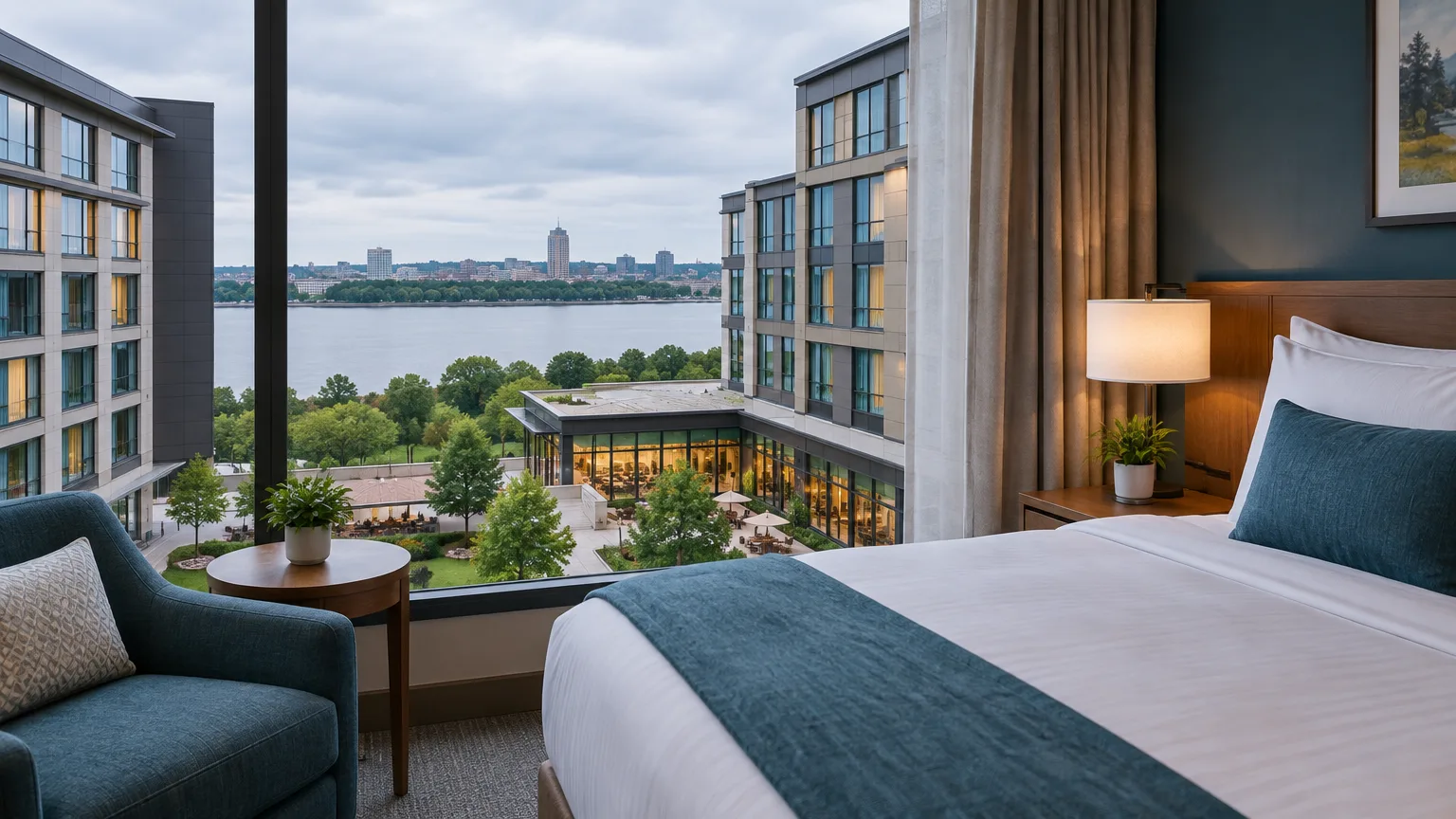
Read the property, not just the star rating
Start with a map. A hotel beside an interstate, airport access road, nightclub block, or busy intersection has a different noise problem from one on a residential side street. Look beyond the front entrance: the quieter-looking side may face a delivery bay or an outdoor bar. If sleep matters more than the view, work out which direction you’d rather face before you pay extra for a room category.
Then search recent guest reviews for terms such as “street noise,” “sirens,” “thin walls,” “elevator,” “AC,” and “blackout curtains.” Look for patterns, not one bad night. Three reports of music from the same courtyard tell you more than a low overall rating with no explanation. Give particular weight to reviews from the same room type and days of the week as your stay; a Friday-night event is less useful evidence for a Tuesday booking.
Photos help with layout, though they rarely tell the whole story. A room described as “interior” might face a quiet courtyard—or an active atrium. At Gaylord Opryland in Nashville, atrium-view rooms overlook indoor gardens, waterfalls, and fountain shows. An interior-facing room is not automatically a quiet one; you need to know what happens in that space after dark.
Before committing to a property with a bar, event space, or pool near guest rooms, call and ask a practical question: “Which room category is least exposed to noise at night?” If the answer depends on the floor or building wing, that is information you can use while booking. If several recent reviews describe noise throughout the property, a room request may not solve the problem. Pick another hotel if you can.
Choose a room by its neighbors
A higher floor can put more distance between you and traffic, sidewalk conversations, and the lobby. It isn’t a universal answer. The top floor may sit below rooftop seating, a mechanical area, or a busy terrace; a lower room may face a calm garden. Ask where the sound is coming from before asking for the “highest room available.”
Inside the building, aim for a guest-room corridor away from the obvious gathering points:
- Elevator banks and stairwell doors, where people stop, talk, and come and go late.
- Ice machines, vending areas, and housekeeping or service closets.
- Meeting rooms, ballrooms, bars, restaurants, and breakfast areas.
- Pools and fitness rooms, especially if your sleep hours overlap with their opening hours.
“Far from the elevator” is a useful start, not a complete plan. The last room in a corridor may be secluded, but it could also abut a service area. A corner room gives you fewer neighboring guest rooms, yet its extra exterior exposure may be a poor trade if it faces a highway. If you’re a light sleeper, ask about both sides of the room: what faces its windows and what adjoins its walls.
Connecting rooms deserve a separate question. They’re convenient when you’re traveling together, but an unused connecting door may make voices next door more noticeable. If you don’t need that arrangement, ask for a nonconnecting room. If you do need one, keep that requirement ahead of a quieter corner or preferred view.
The strongest request names your main risk and leaves the staff room to work with the building they know: “Could I have a room away from the elevators and ice machine, preferably on the quieter side of the property?” That’s more helpful than demanding a particular floor without knowing what’s on it.
Make darkness part of the room choice
A room can be quiet at midnight and bright at 5 a.m. East-facing windows may catch early sun; streetlights, illuminated signs, parking lots, and courtyard lighting can leak around curtains all night. A west-facing room avoids early sun but may face a noisier street. If you sleep past sunrise or need to sleep during the day, ask about the window coverings and the direction the room faces.
“Blackout curtains” is worth checking rather than assuming. Ask whether the room has blackout shades or lined drapes, and look at photos for gaps where panels meet or stop short of the wall. A room overlooking an interior atrium may avoid headlights yet still receive light from shared spaces. Likewise, an attractive pool view can mean exterior lighting outside your window.
The CDC recommends a dark, quiet sleep environment and suggests an eye mask when outside light is hard to avoid. An eye mask is an easy backup; it shouldn’t be your only plan if you’re paying for a room where you must sleep during daylight hours.
Light inside the room counts, too. Look for a bright thermostat, TV standby light, clock display, or light spilling under the hallway door. Those are usually easier to address than a streetlamp aimed straight at the window.
Ask early, then confirm at check-in
Book the room category that meets your needs, then add a short location request through the hotel’s booking channel. If you booked through a third party, contact the property directly as well so your preference reaches the people assigning rooms. A useful note reads:
I’m a light sleeper. If available, I’d appreciate a nonconnecting room away from the elevators and ice machine, on the quieter side of the building. Blackout curtains would also help. Thank you.
Adjust that note to the actual property. If reviews point to a rooftop bar, ask for a room away from it rather than piling on every possible preference. Tell the hotel when you plan to sleep if it changes the request: someone working nights may need distance from daytime pool activity or housekeeping traffic rather than a quiet late-night corridor.
Treat a location request as a preference, not a reserved room. Even Marriott Bonvoy’s guaranteed room-type benefit excludes room location from its guarantee. If the position of the room is essential, ask the hotel what it can commit to before you book rather than relying on a note in the reservation.
Some hotels give you another chance to choose before arrival. When digital check-in is available, Hilton Honors members can select from available rooms in the app. A room number is useful only if you understand the layout, though. If the app doesn’t make clear what’s next to the room, call the front desk instead of guessing from its floor.
At check-in, repeat your top priority in one sentence and ask what has been assigned. “Does this room face the street?” or “Is there an event space above it?” gets a more useful answer than “Is it quiet?” If the hotel offers a choice, favor the room that avoids a known noise source over one that simply sounds better on paper. A slightly longer walk from the elevator is often a fair exchange for fewer interruptions.
Inspect the room before you settle in
Don’t unpack first. Stand quietly for a minute, then check the window side and the hallway side. Close the door fully. Listen for traffic, conversations, music, equipment, and the room’s heating or cooling system. Open and close the curtains to see how they meet. If you arrive in daylight, check what sits outside the window and whether a sign or fixture is likely to shine into it later.
A five-minute inspection can catch problems that a room number cannot:
- Turn on the heating or cooling system and listen for rattling or a loud cycling noise.
- Check whether the curtains close fully and cover the window edges.
- Look for light around the entry door and bright displays near the bed.
- Note any connecting door, nearby elevator bank, or service area.
- Check the view for a roadway, event terrace, pool, or exterior lighting.
Do this while a move is still simple. If you find a clear problem, call the desk with the cause: “The room faces the loading area; is there an available room on the other side?” A concrete explanation makes it easier for staff to offer a meaningful alternative. If no better room is free immediately, ask whether one may open later and decide whether moving then is worth it for the rest of your stay.
Use small fixes for small problems
Once you’re in the best available room, deal with what remains. Draw the curtains tightly; a clip can hold drapes together if the fabric allows it. Turn an illuminated clock away from the bed and switch off lights you don’t need. Keep a clear path to the bathroom rather than making the room so dark that you trip when you get up.
Earplugs or a comfortable eye mask can help with stray sound and light. The CDC’s hotel sleep advice also suggests packing clips for drapes and covering lighted clock displays. Earplugs may be a poor choice if you need to hear a child, a companion, or an important alert, so use the backup that fits your circumstances.
A fan or steady background sound may make occasional hallway noise less noticeable, but it won’t fix music through the wall or heavy traffic through a poorly sealed window. For persistent noise, ask for a move rather than spending the whole stay trying to mask it. Hotel sleep guidance also points to street noise, unwanted window light, and ventilation noise as reasons to consider changing rooms.
The best quiet-room strategy is specific at each stage: choose a property with a workable layout, request distance from the noise source you’ve identified, and test the assigned room before you settle in. Floor number alone can’t do that work for you.